


Often in life you question “how did we get here” and that’s never truer in the constant state of flux with the America’s Cup that now mandates women on the AC75 - a clock that is never going back. That’s great for the sport, and great for the emerging pathways that lead to the pinnacle and is something that I campaigned for, for years, hollering into an empty void at times. But the real genesis of inclusion in the Cup can be charted to San Diego in 1995 and that incredible Bill Koch era of campaigning. Having sensationally won the Cup in 1992, Bill had a new vision, one that would change the sport seismically forevermore, yet it wasn’t without its issues and controversies. And many still rankle today.
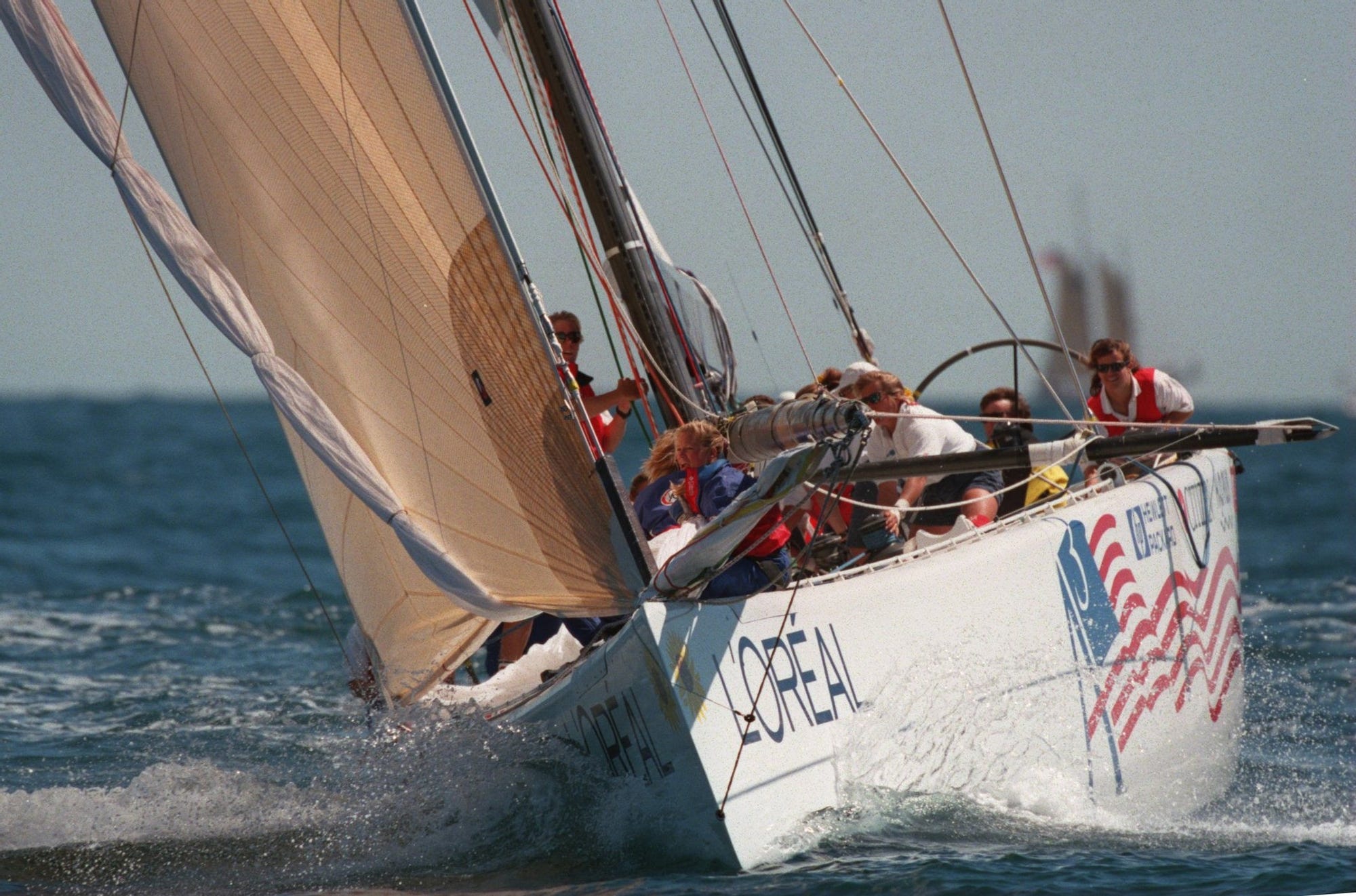
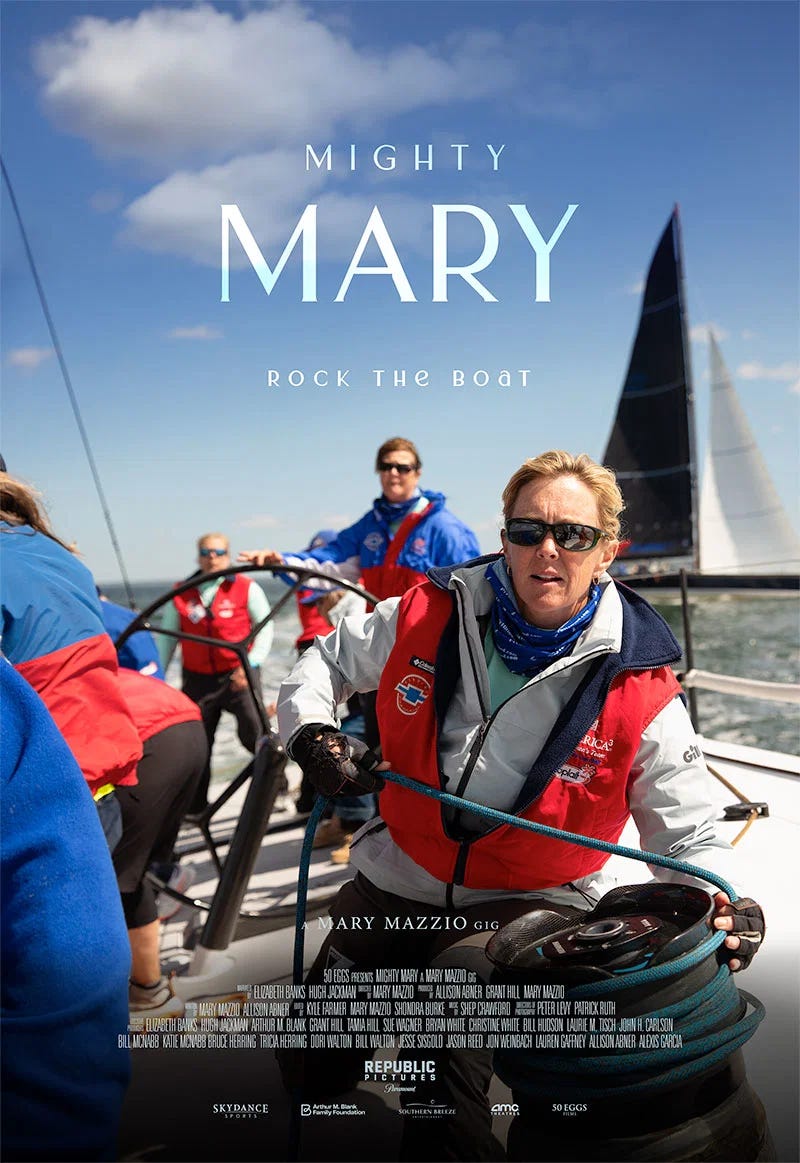
A couple of months ago I was given a private screening of the new Mighty Mary film that comes to cinemas on a global release on September 11th. Quite simply it is the most engaging, engrossing film on the America’s Cup that you will ever see. The screening link was sent to me by the producer, Mary Mazzio, herself an Olympian having competed in Barcelona in the 1992 Games as a rower, and I had a busy day that morning so thought I would just watch it in snippets. I couldn’t put it down. I watched it beginning to end and the storytelling is just remarkable. I knew the story to an extent. I knew some of the sailors personally. But what I didn’t know was the full story - and I suspect that many of us have either forgotten it, or never knew. You simply have to watch this film.
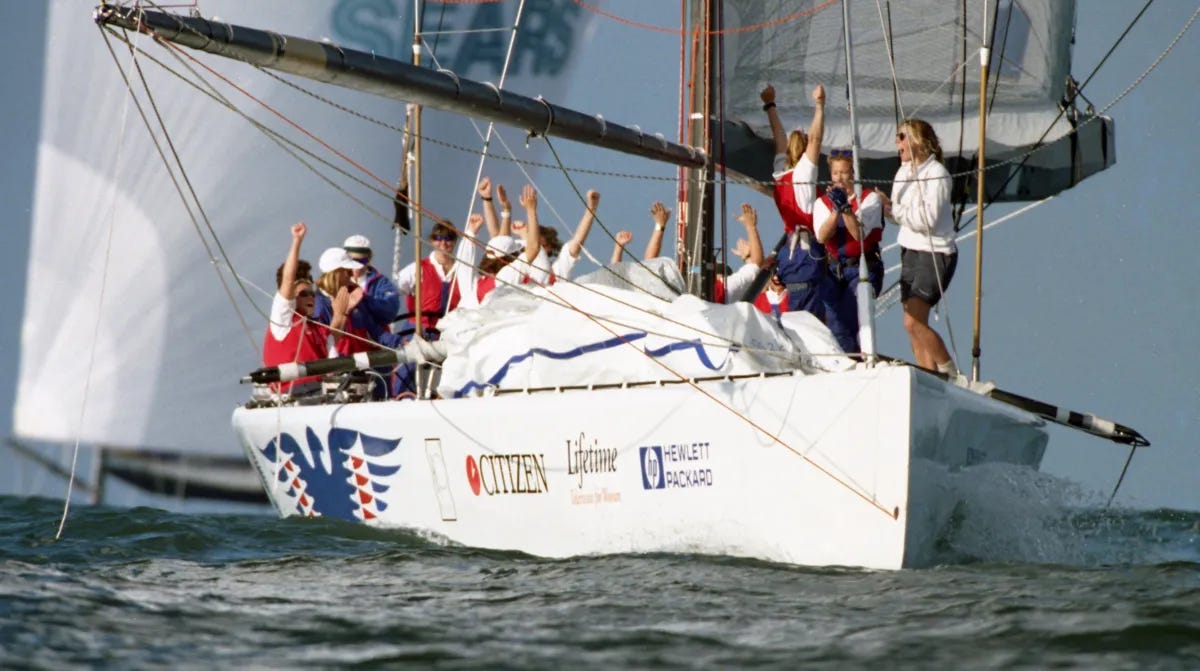
The genius in Mighty Mary is the scripting. Narrated by Hugh Jackman and Elizabeth Banks, it stages the classic ‘right versus wrong’ scenario and the ‘impossible Everest’ to climb that befell Dawn Riley and her crew. Back in 1995, the world was a very different place with open misogyny in the workplace and in the media. To the shame of many of the yachting writers of the time, the easiest copy to write was the negative and Bill Koch’s vision was largely portrayed as a publicity stunt. The idiocy of that tenet is a message that comes through loud and clear in the film. Genuinely, Bill Koch was doing something different and snubbing preconceptions about women in sailing. It was ground-breaking.
Through adverts in the New York Times, the team came together and at their own admission were a diverse group that identified and addressed the challenges of crewing an IACC boat - one of the truly toughest boats ever to sail in for the America’s Cup.
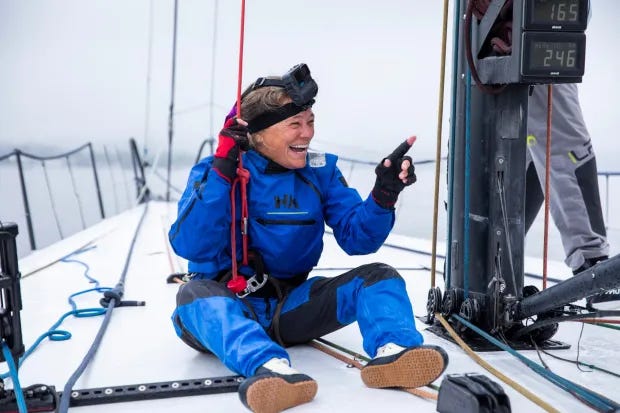
The afterguard were impressive with Dawn Riley leading along with Leslie Egnot steering and JJ Fetter starting helm and tactician (later Dave Dellenbaugh), Courtney Becker-Day on nav, Hannah Swett port trimmer, with Katie Pettibone and Merritt Palm rotating on starboard, Melissa Purdy Main Trim with Debbie Pettibone as an alternate, Lisa Charles, Joan Touchette, Merritt Carey and Suzy Leech, in the front and Amy Baltzell and many rowers grinding. The grinding squad were particularly impressive with one of the stand-out stories being that of the late Shelley Beattie who was an elite bodybuilder and had been ‘Siren’ on the US hit show ‘Gladiators,’ despite being deaf. How the crew adapted with hand signals is beautifully portrayed in the film.
When the Defender selection trials began, the Mighty Mary team were anxiously waiting for a new boat to be delivered that was promised to be a rocket-ship off the in-house drawing board of Doug Peterson and Jim Taylor and under the guidance of America³ Design Director Professor Jerry Milgram. When it arrived, it wasn’t quite the speed demon they had hoped for, but results improved and as the rounds intensified, Mighty Mary were in close contention.
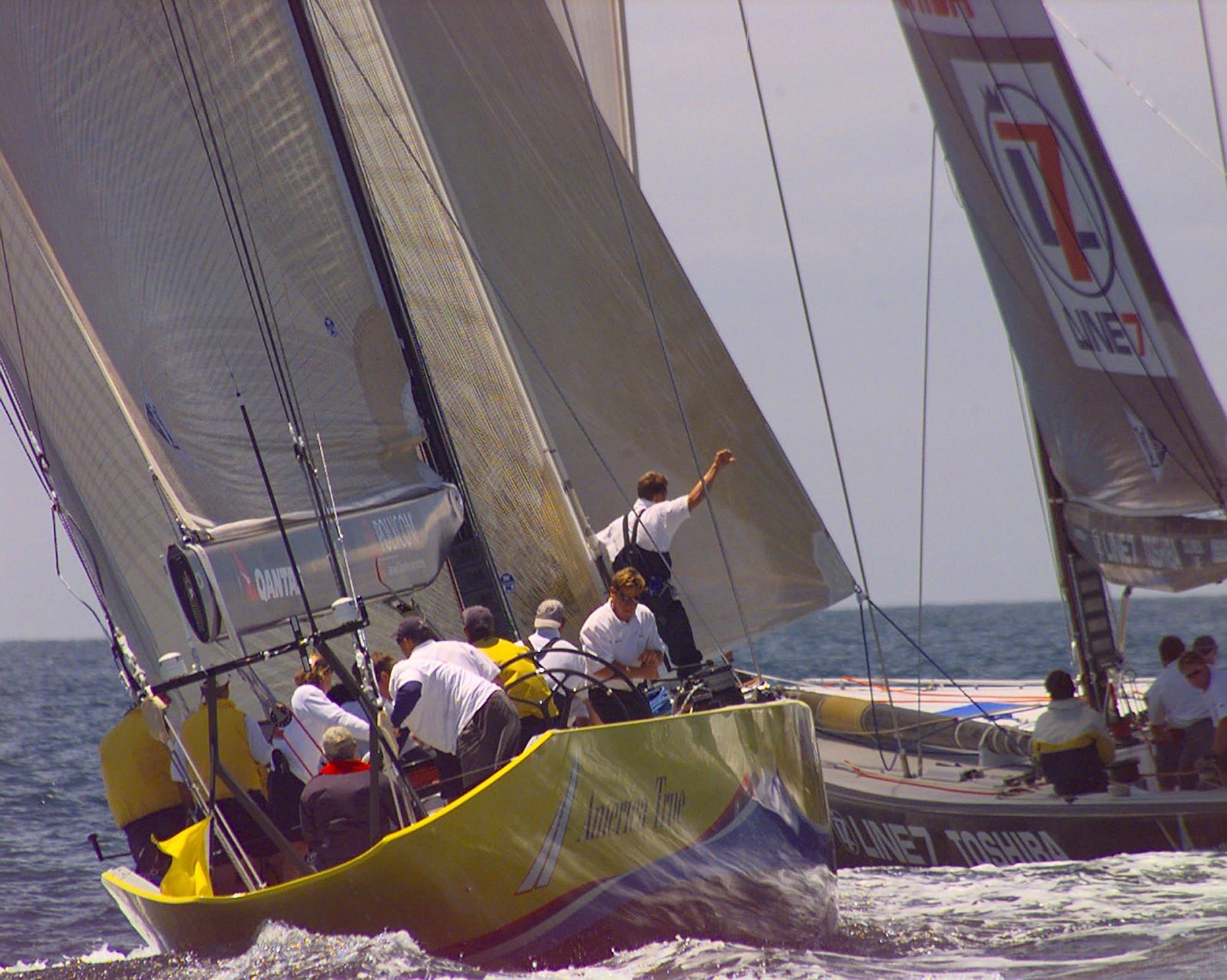
Ranged against the women in that Citizens Cup of 1995 were two boats - Young America (USA-36) and Stars ‘n’ Stripes (USA-34), both of which were unremarkable for the time design-wise but had sailors that knew the ‘game’ of the America’s Cup better than anyone on the planet. Step forward Dennis Conner and his young hotshot helm Paul Cayard on Stars ‘n’ Stripes, whilst Kevin Mahaney, John Kostecki and Ken Read formed the brains trust of Young America. These were sailors that would do anything to win. Pride was on the line. None of them liked being beaten by a women’s team. It was 1995 macho culture writ large and on reflection it still ranks today as one of the most egregious America’s Cups in history.
The crux of the film is the fleeting sheer elation that the Mighty Mary team enjoyed when they knocked-out Dennis Conner. It was short-lived joy. Gary Jobson came onboard as a reporter straight after and informed the team that a back-room deal had been struck to extend the Citizens Cup and keep Stars ‘n’ Stripes in for the sake of the defence as it was obvious that the Sir Peter Blake-led Team New Zealand was operating on another level.
It crushed the spirits of the Mighty Mary team and is yet another example of the warning that I give to anyone competing in this ‘game’ that it’s a brutal, uncompromising, seedy war both on and off the water. Dennis Conner played harder than anyone throughout his career, and in old age now reflects on a dark time although never quite apologises. Others do. It was a murky affair.
The history thereafter is well known. Conner won through and then another deal was struck for him to have Young America in the defence where they were thumped 5-0 by Coutts & Co. That’s a great slice of history for New Zealand, but a poor result from a haphazard and downright disgraceful episode. The film shows it all beautifully. It absolutely captures the emotion and the reflection which for many of the crew, even today, is a hard pill to swallow understandably. What the Mighty Mary crew achieved was outstanding and there’s little doubt in my mind that they would have put up a better defence, riding a wave of confidence and belief, than Young America offered.
When I look at our sport today, with so much fabulous opportunity all over for women and youth from the grassroots to the pinnacle events, it brings me a lot of happiness but the knowledge of ‘how we got here’ is enriched by films like Mighty Mary.
It may well be true across other sports too, but every single person involved in the America’s Cup or with ambitions to get to the pinnacle, needs to watch Mighty Mary. It’s the most captivating film of 2026 - period - and in my opinion, the finest documentary every filmed about the America’s Cup.
Magnus Wheatley